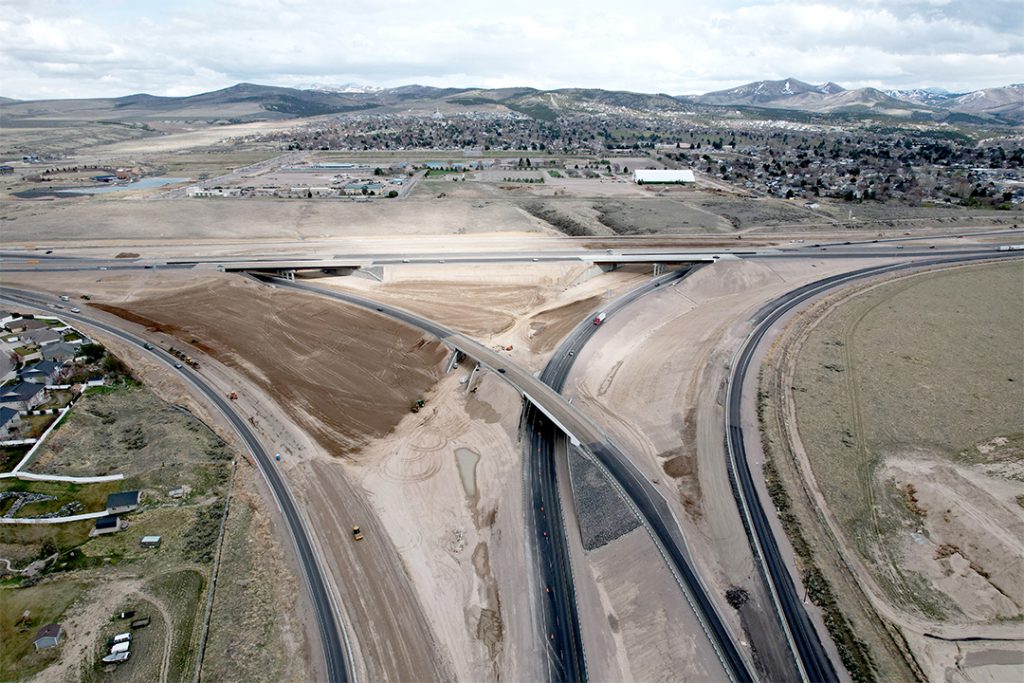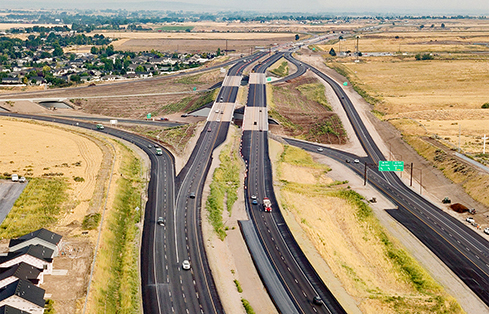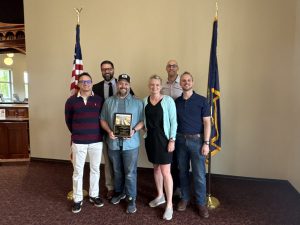
GeoEngineers won 1st place in the 2026 ACEC of Idaho Engineering Excellence Award (EEA) Structural Systems Category for our hard work on the I-86/I-15 System Interchange project in Pocatello, Idaho. April Smith, Ryan Carnie, Ryan Olsen, Morgan McArthur, and partners from the Idaho Transportation Department (ITD) celebrated this win at the EEA Luncheon on April 13 at the Idaho State Museum in Boise.
The I-86/I-15 Interchange was constructed in the 1960s and was due for a major upgrade. GeoEngineers partnered with ITD to improve safety and replace aging structures, providing geotechnical engineering for eight new bridges and associated infrastructure. Working alongside ITD’s in-house structural engineers, our team provided design recommendations for mechanically stabilized earth (MSE) retaining walls, driven piles, and large-diameter drilled shafts—while also supporting field testing, construction, and challenges that arose during this critical highway improvement project.
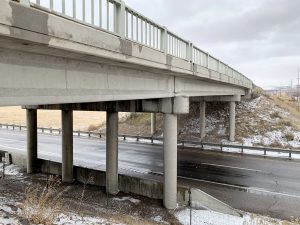
Our team helped navigate various hurdles during the construction and design portions of the project. One unique challenge turned out to be a defining moment that reshaped ITD’s approach to future transportation infrastructure projects statewide. The team knew supporting the center pier for four new I-15 ramps with driven-pile foundations in collapsible loess overlying boulder-laden alluvial fan deposits would be a challenge. GeoEngineers suggested large-diameter drilled shaft foundations instead, but these are not common in Idaho transportation projects, and ITD designers had limited experience with them.
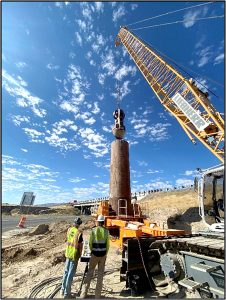
To validate this different approach, our team designed and executed a full-scale bi-directional static load test on a 60-foot-long, 7.2-foot-diameter sacrificial drilled shaft. Our approach not only proved successful in terms of performance in difficult geotechnical conditions but also led to a 5-foot reduction in production shaft lengths, saving ITD approximately $170,000 in construction cost. ITD gained more confidence in using drilled shafts where appropriate, giving them more options for transportation projects facing difficult geotechnical conditions.
As this highly visible infrastructure project progressed, the adaptability and teamwork of our collaborative partnership with ITD helped us quickly find solutions to unexpected challenges that could have led to project delays. For example, the drilling subcontractor identified risks associated with removing steel casing from the initially specified 2-meter shafts. Our team took action immediately with ITD to evaluate and sign off on an increase to 2.2 meters. Later, during construction of the Northbound Over Eastbound Bridge, two drilled shafts were placed slightly outside their intended spots. With help from our team, ITD and the contractor adjusted the shaft cap design and location so it aligned with the shaft locations as constructed, which helped prevent construction delays. These lessons learned have set up our team for success in future ITD projects as it relates to adjusting tolerances for shaft placement, widening cap designs, and survey accuracy.
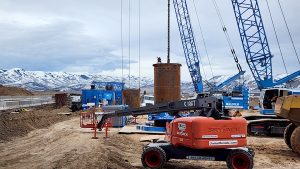
Our team went above and beyond in this project, from strengthening standards for more bridge projects in Idaho to building a more trusting relationship with ITD. This ACEC honor showcases the dedication of our team to finding new ways to give back through education, collaboration, and innovation. Congratulations to our team and everyone who was involved in making this project a success!